AI rankings, accidental clicks, fraudulent ads, and antitrust battles
Hi friends,
Welcome to the new issue of HighDegree*: Cutting Through the Noise in SEO & Digital Marketing.
This week brought major developments across search and digital advertising. Google revealed how PR activities influence AI recommendations, while a new ad layout is driving confused clicks. Meta’s internal documents exposed a stunning acceptance of scam ad revenue, and JavaScript continues to trip up site owners trying to rank well. Meanwhile, Raptive joined the growing wave of lawsuits targeting Google’s ad tech monopoly.
Let’s jump in —
➞ In this Week
How PR Work Now Influences AI Search Rankings
Google’s New Ad Layout Tricks Even Search Experts Into Clicking
Meta Projected $16 Billion in Revenue From Scam Ads
JavaScript SEO Checklist: Avoid These Rendering Mistakes
Publisher Raptive Sues Google for Systematic Ad Auction Manipulation
Everything from Google Search this Week
Find Out What’s Happening in the Social Media and Artificial Intelligence World
Worth Reading Articles that will Help You Refine Your Marketing Knowledge
➞ Subscribe
If you are not subscribed to HighDegree* Yet, please subscribe to us by clicking the “Subscribe” button below. I will post every issue to HighDegree* substack version, so you can get it instantly in your inbox every time I hit publish!
➞ How PR Work Now Influences AI Search Rankings
Google’s VP of Product confirmed that getting mentioned by other sites helps your business appear in AI-powered search recommendations. Robby Stein explained that Google’s AI behaves like a human researcher, issuing multiple Google searches to answer questions. If your business appears in top lists or widely-read articles, the AI is more likely to find and recommend you. This isn’t technically a “ranking factor,” but the practical effect is clear: digital PR that gets your brand mentioned on reputable sites now feeds directly into AI answers.
“Yeah, interestingly, the AI thinks a lot like a person would in terms of the kinds of questions it issues. And so if you’re a business and you’re mentioned in top business lists or from a public article that lots of people end up finding, those kinds of things become useful for the AI to find.”
The same content best practices that work for traditional search apply here—helpful, clear information optimized for the questions people actually ask. Stein emphasized studying how users interact with AI, particularly for complicated how-to queries, purchase decisions, and life advice. Multimodal searches using images and voice are growing rapidly, making image SEO increasingly important.
Read the full report from searchenginejournal.com ➞
Meanwhile, changes to Google’s ad display are creating confusion for searchers and advertisers alike.
➞ Google’s New Ad Layout Tricks Even Search Experts Into Clicking
Google recently rolled out a redesigned ad layout that groups multiple sponsored results under one “Sponsored results” label, with a “Hide sponsored results” button appearing only after you’ve scrolled past all the ads. The result? Even seasoned search marketers and SEO professionals report accidentally clicking ads—some multiple times.
Barry Schwartz, who tracks Google updates closely, clicked ads twice in one week on navigational queries where he specifically tried to avoid them. An informal poll of industry professionals showed roughly 18% admitted to accidental clicks, with many others unsure whether they had clicked ads or organic results. The design obscures which results are paid, forcing users to see ads before offering any opt-out option.
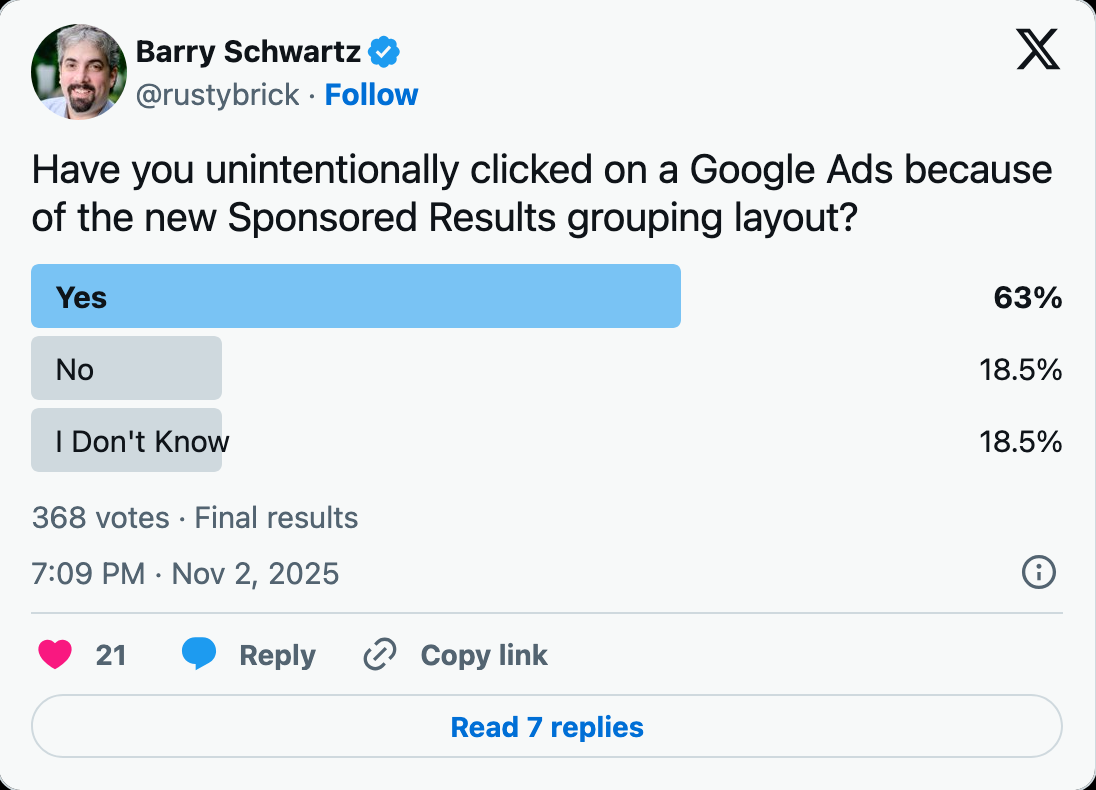
If experienced marketers struggle to distinguish ads from organic results, average searchers face even greater confusion. This layout appears designed to drive more ad clicks and revenue, not to improve user experience as Google claims.
Read the full report from seroundtable.com ➞
The next story reveals even more troubling advertising practices at a different tech giant.
➞ Meta Projected $16 Billion in Revenue From Scam Ads
Internal Meta documents obtained by Reuters reveal the company expected to earn approximately 10% of its 2024 revenue—roughly $16 billion—from advertising scams and banned goods. The social media giant estimates it shows users 15 billion “higher risk” scam ads daily across Facebook, Instagram, and WhatsApp. Meta only bans advertisers when automated systems predict at least 95% certainty of fraud. Below that threshold, the company charges suspected scammers higher rates as a penalty rather than removing them entirely.
Documents show Meta’s leadership decided to act on scam ads only when facing regulatory pressure, not voluntarily. The company has set revenue limits on enforcement efforts and projects regulatory fines will remain far smaller than scam ad revenue. Meta’s own research suggests its platforms are involved in one-third of all successful scams in the United States. While the company claims to have reduced user reports of scam ads by 58% over 18 months, the sheer scale of fraudulent advertising raises serious questions about platform accountability.
Read the full report from reuters.com ➞
Technical SEO challenges persist beyond platform policies, especially for JavaScript-heavy sites.
➞ JavaScript SEO Checklist: Avoid These Rendering Mistakes
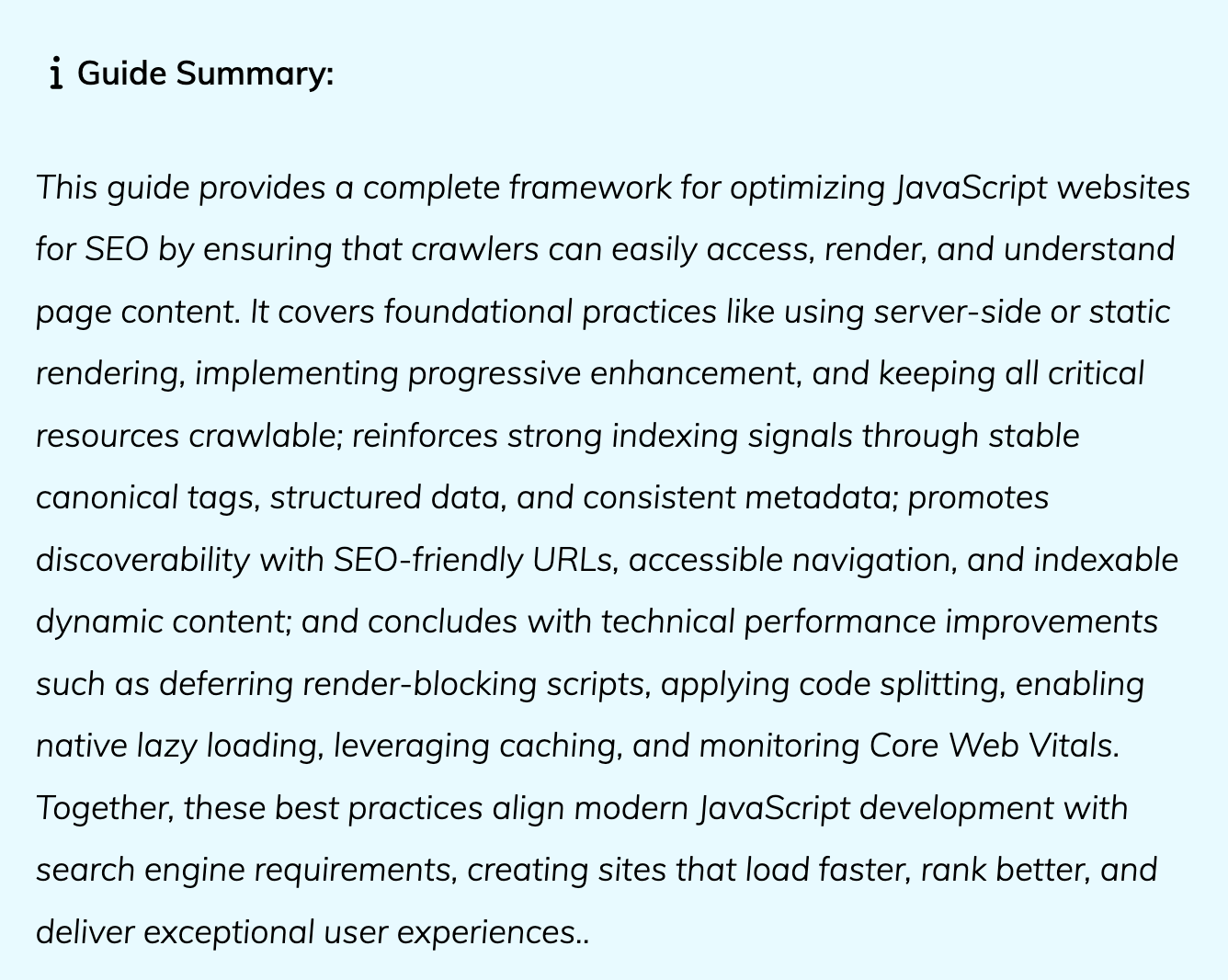
Modern JavaScript frameworks create fast, interactive websites but introduce unique SEO challenges when improperly configured. Joe Hall’s comprehensive guide outlines critical practices across four areas: ensuring pages are crawlable and renderable, optimizing indexing signals, improving content discovery, and boosting page speed. Key mistakes include relying solely on client-side rendering instead of server-side rendering or static site generation, which leaves crawlers with empty HTML.
Never block JavaScript, CSS, or image directories in robots.txt—Google needs these resources to render pages correctly. Place all meta tags, canonical URLs, and structured data in the initial HTML, not injected by JavaScript after page load. Use proper anchor tags with href attributes for navigation rather than onClick handlers. Avoid hash-based routing that creates URLs like /page#section, which search engines treat as the same page. For hidden content like tabs or accordions, include it in the HTML even if initially hidden by CSS. Split code strategically and defer non-critical scripts to improve Core Web Vitals without sacrificing functionality.
Read the full guide from cloud22.com ➞
Finally, the legal battles over digital advertising infrastructure are intensifying.
➞ Publisher Raptive Sues Google for Systematic Ad Auction Manipulation
Raptive, which manages advertising for over 6,000 websites, filed a comprehensive antitrust lawsuit seeking billions in damages after a federal court ruled Google illegally monopolized digital advertising markets. The 93-page complaint alleges Google manipulated ad auctions for over a decade through schemes including “Last Look” (allowing Google’s exchange to see competitor bids before submitting its own), “Project Bernanke” (manipulating bids to create a slush fund for beating rivals), and “Dynamic Revenue Share” (selectively adjusting take rates to win specific auctions). Google controls over 90% of the publisher ad server market and 60-70% of the ad exchange market, primarily through its 2008 DoubleClick acquisition.
Internal documents show Google made $30 billion in 2022 from manipulating these auctions. Judge Leonie Brinkema’s April 2025 ruling found Google “willfully engaged in anticompetitive acts,” providing a legal foundation for private lawsuits. Raptive joins OpenX, PubMatic, and Magnite in seeking damages, with a New York court ruling that Google’s liability findings apply to all private litigation.
Read the full report from ppc.land ➞
➞ From Google
Everything from Google search this week —
→ YouTube Introducing Edit with AI: A New Tool That Makes Shorts Creation Easier & More Efficient (support.google.com/youtube)
→ Google AI Overviews drive 61% drop in organic CTR, 68% in paid (searchengineland.com)
→ Google PSA: Verify Your Hosted Cloud Provider Host In Search Console (seroundtable.com)
→ Google Search Central Introducing Query groups in Search Console Insights (developers.google.com/search)
→ Google’s John Mueller On Best CMSs For SEO (seroundtable.com)
➞ AI + Social
Find out what’s happening in the social media and artificial intelligence world —
→ Perplexity Responds To Reddit Lawsuit Over Data Access (searchenginejournal.com) – Reddit sued Perplexity in over access to Reddit content. Perplexity says it summarizes posts with citations and does not train on them.
→ SerpAPI Response to Reddit, Inc. v. SerpApi, LLC: Defending the First Amendment (serpapi.com)
→ Group chats in ChatGPT, Personality and custom instructions now apply to all chats (openai.com) – Now you can bring people – and ChatGPT – into the same conversation.
→ Wikimedia Foundation pissed off with AI companies using free Wikipedia content for training and now wants them to pay (wikimediafoundation.org)
→ Sora is now available on Android in the US, Canada, and other regions (techcrunch.com) – Sora, the AI video generator from OpenAI, is now officially available for Android users in the U.S., Canada, Japan, Korea, Taiwan, Thailand, and Vietnam.
→ Amazon introduces Kindle Translate, an AI-powered translation service for authors to reach global readers (aboutamazon.com) – The service translates between English and Spanish, and from German to English, expanding opportunities for Kindle Direct Publishing authors.
→ Coca-Cola’s 2025 AI-driven holiday ad draws mixed reactions (marketing-interactive.com) – Netizens criticised the ads for a perceived lack of creativity and nostalgia relative to previous campaigns, saying the “magic” historically associated with Coca‑Cola seems diminished by the increased reliance on AI.
→ Shopify Witnesses 7x AI Traffic and 11x AI Orders (findarticles.com) – Shopper visits coming from AI tools on Shopify products have jumped 7x since January, while orders attributed to AI searches increased 11-fold.
→ The social media updates to know in November 2025 (brandnation.co.uk) – Here’s everything marketers, creators and brands need to know about the latest social media updates for November 2025.
→ ChatGPT Go subscription now free for 12 months in India: Complete guide on features and how to get the deal (timesofindia.indiatimes.com)
→ Semrush has a new tool to help marketers win in the AI age – make sure your business doesn’t get hidden (techradar.com) – Semrush, a long-established name in online analytics, has introduced a new platform called Semrush One, designed to address this shift.
→ Musk Takes On Wikipedia With AI-Generated ‘Grokipedia’—What To Know (forbes.com) – Several articles on Grokipedia include a disclaimer at the bottom, which reads: “The content is adapted from Wikipedia, licensed under Creative Commons Attribution-ShareAlike 4.0 License”.
→ What’s new in Microsoft 365 Copilot | October 2025 (techcommunity.microsoft.com)
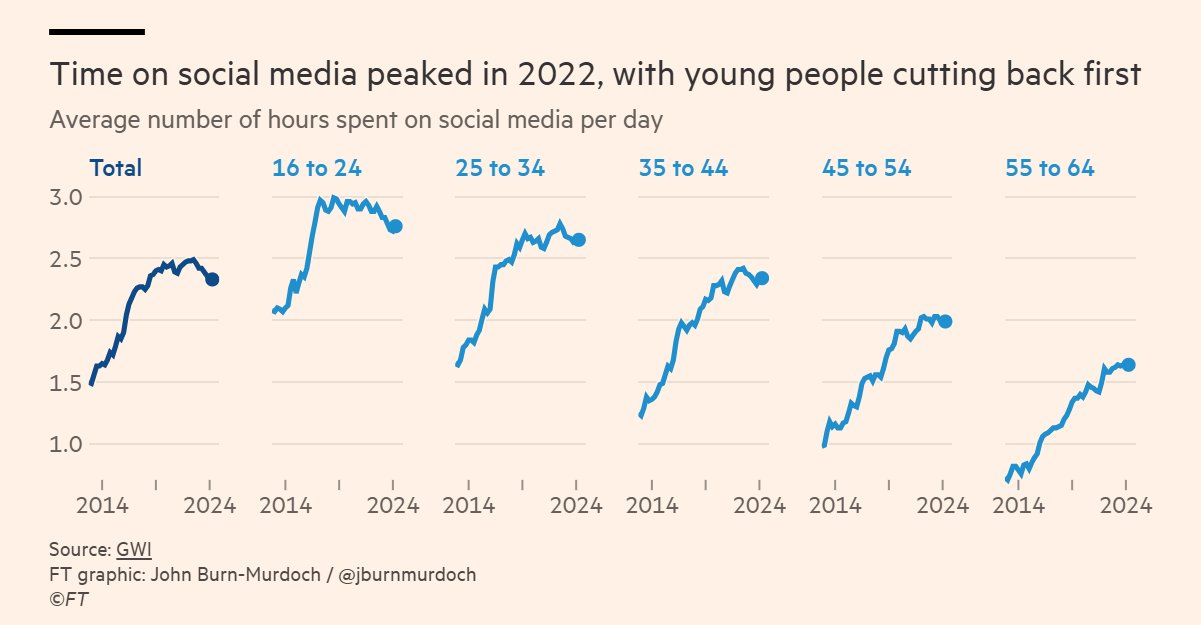
→ “It has gone largely unnoticed that time spent on social media peaked in 2022 and has since gone into steady decline.” (By @jburnmurdoch)
→ Threads Reaches 150M Daily Active Users (socialmediatoday.com)
➞ Worth Reading
These are the articles that will help you refine your marketing knowledge —
→ Why I’m Shutting Down Lorelight (And What It Taught Me About GEO) (growwithless.com)
→ How to Write An Optimized Content Brief + Free Template (keywordinsights.ai)
→ Worth Watching: How to perform a technical SEO audit (Google Search Central YouTube Channel)
→ ChatGPT’s paid and free versions are pulling search results from completely different engines. Here’s what you need to do right now. (x.com/mattdiggityseo)
→ How to get cited in AI answers (productledseo.com)
→ PDP Optimization: A Blueprint for Product Pages People Love & Buy From (sitebulb.com)
➞ What This All Means for Your Strategy
The common thread this week? Major platforms wield enormous control over how content gets discovered and monetized. Whether it’s AI shaping recommendations, ad layouts influencing clicks, scam policies prioritizing revenue, JavaScript affecting indexing, or monopolistic practices squeezing publishers, small changes at Google and Meta create outsized effects for everyone else.
Focus on what you can control: build genuine authority through quality content and earned mentions, ensure your technical foundation is solid, and stay informed as these legal and regulatory battles reshape digital advertising. The landscape is shifting—adapt proactively rather than reactively.
Until next week,
Nishat from HighDegree* Marketing Newsletter.
P.S. Have a question about implementing these strategies? Hit reply – we read every email and often feature reader questions in future issues.
➞ Who is Nishat Shahriyar?
I am a Digital Marketing Strategist, doing this since 2007. Now working as a Product Marketing Lead at Fluent Forms (The best lead generation tool for WordPress), Previously at Fluent Support (The best WordPress Helpdesk Plugin).
Connect with me, if you are not connected through my LinkedIn or Follow me on — X/Twitter – @rednishat
Leave a Reply