Google’s quality raters just got new instructions about AI content, plus the brutal ranking data that’ll change how you think about SEO timelines…
Hi friends,
Welcome to the new issue of HighDegree*: Cutting Through the Noise in SEO & Digital Marketing
This week, we’re diving deep into three major developments that are reshaping how we think about SEO and content creation. From Google’s latest quality guidelines to hard data on ranking timelines, plus a comprehensive look at AI content performance – there’s a lot to unpack.
Let’s jump in.
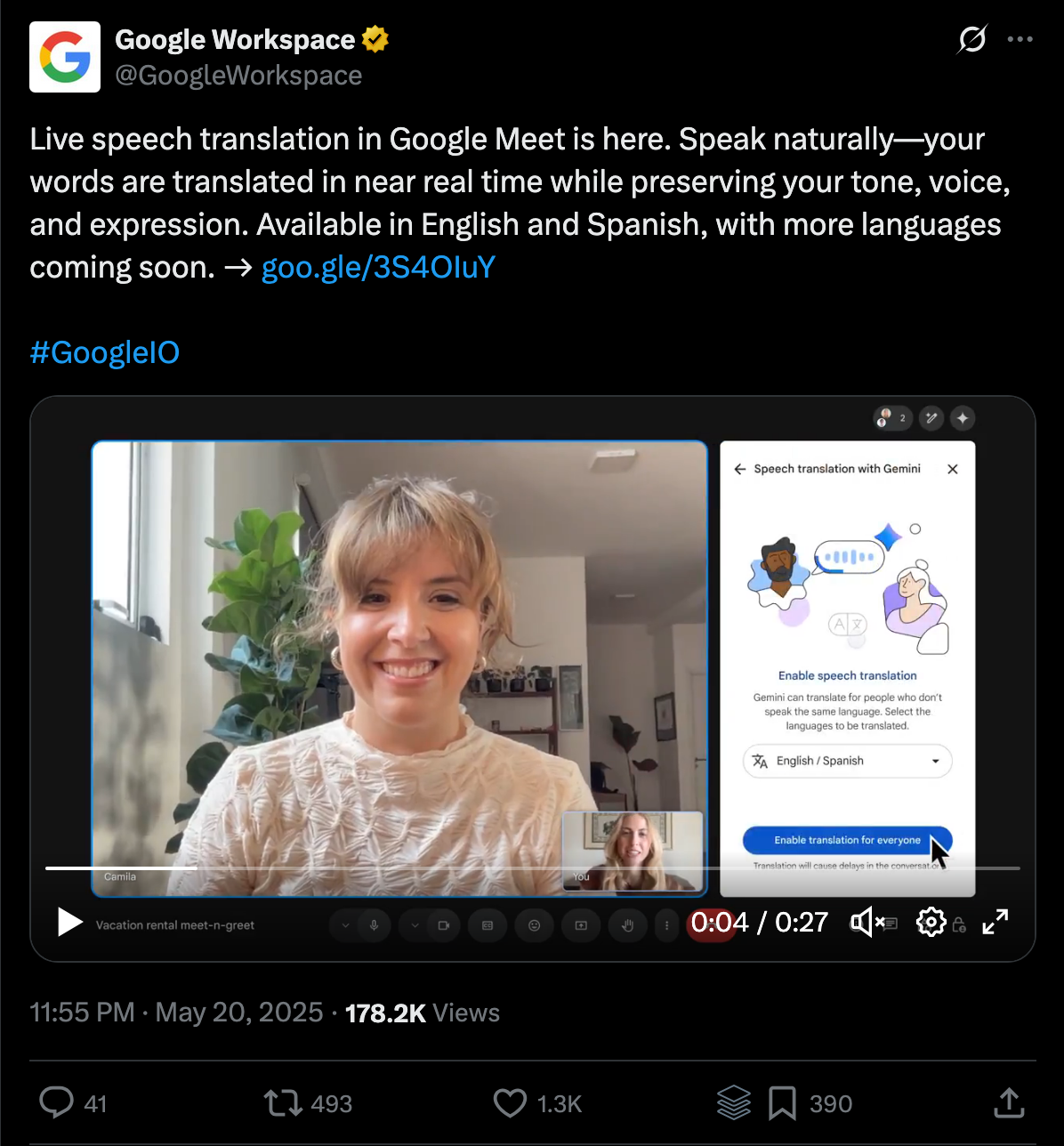
But first, let me tell you what is the only Google I/O update I’m most excited for —
➞ In this Week
Google Just Made AI Content Detection Official (And What It Means for You)
The Brutal Truth About Ranking Times (Spoiler: It’s Getting Harder)
AI Content Can Rank (Here’s the Data That Proves It)
➞ Subscribe
If you are not subscribed to HighDegree* Yet, please subscribe to us by clicking the “Subscribe” button below. I will post every issue to HighDegree* substack version, so you can get it instantly in your inbox every time I hit publish!
➞ Google Just Made AI Content Detection Official (And What It Means for You)
Google’s quality raters have new marching orders: identify and flag AI-generated content as lowest quality. This came straight from John Mueller at Search Central Live in Madrid, and it’s now part of the January 2025 Search Quality Rater Guidelines update.
New AI Definition: Google formally defines generative AI as “a type of machine learning model that can take what it has learned from examples to create new content.” They call it useful but warn it can be misused.
The Big Shift: The old “Auto-generated MC” section is gone, replaced with four new spam categories:
Expired Domain Abuse: Buying old domains just to leverage their ranking power
Site Reputation Abuse: Publishing third-party content on established sites purely for SEO juice
Scaled Content Abuse: Mass-producing content with little effort (AI gets specifically mentioned here)
Low-Effort Main Content: The catch-all for paraphrased, AI-generated, or reposted content with no added value
The Rating Reality: Content gets flagged as “Lowest” quality if it’s “copied, paraphrased, embedded, auto or AI generated, or reposted from other sources with little to no effort, little to no originality, and little to no added value.”
But here’s the interesting part – raters are told to look for telltale signs like content that “only contains commonly known information,” has “high overlap with Wikipedia,” or includes phrases like “As an AI language model.”
What This Means: Google’s drawing a clear line between low-effort AI content and quality content that happens to use AI tools. The focus isn’t on the tool – it’s on the value delivered to users. If you’re using AI to create thin, generic content, you’re in the crosshairs. If you’re using it as part of a thoughtful content creation process, you’re likely fine.
The message is clear: effort and originality matter more than the method of creation.
Read the full report from searchengineland.com ➞
➞ The Brutal Truth About Ranking Times (Spoiler: It’s Getting Harder)
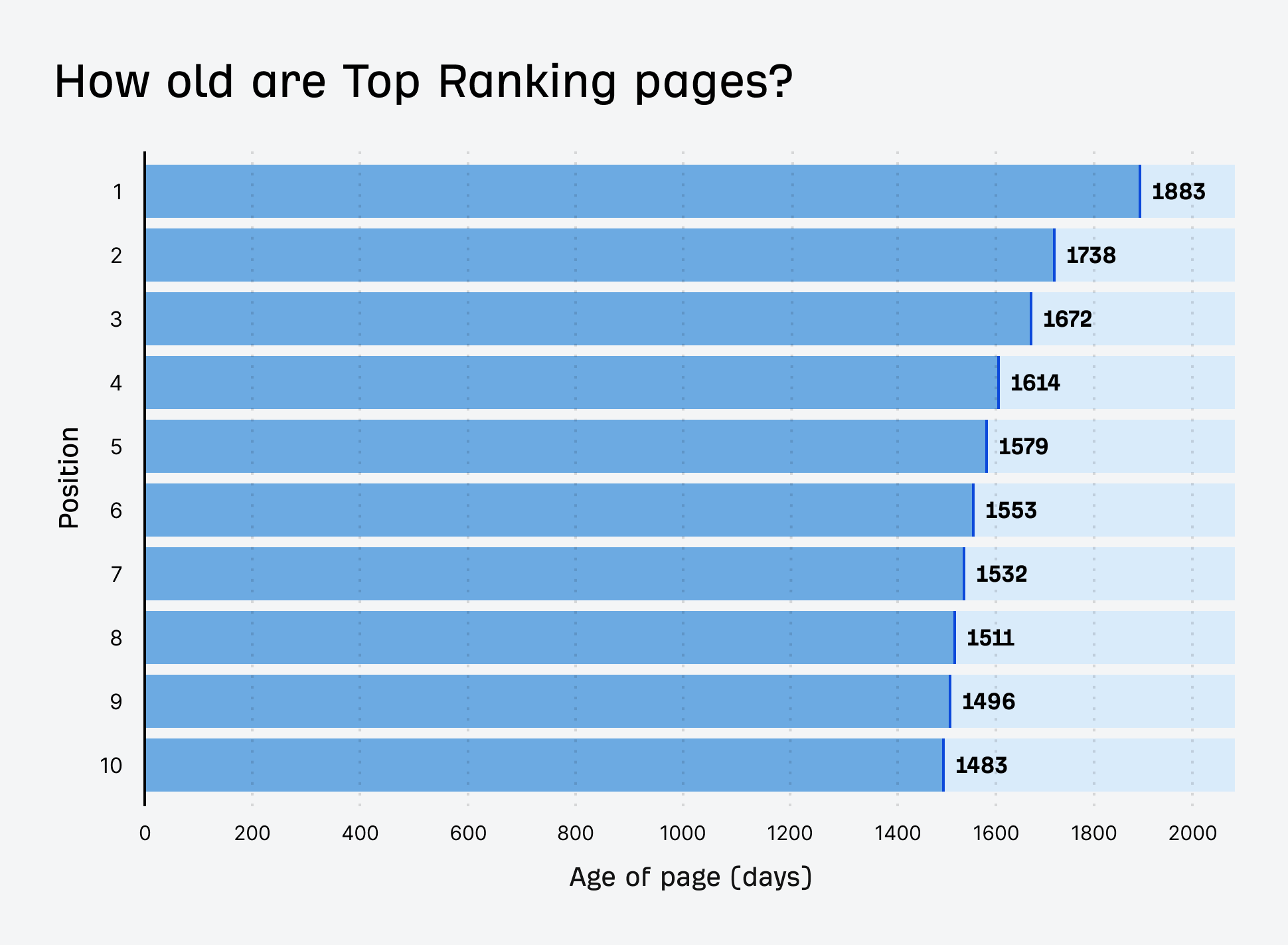
Remember when you could publish a post and see it ranking within months? Those days are fading fast. New data from Ahrefs reveals just how much the SEO landscape has tightened up.
The Numbers Don’t Lie:
Only 1.74% of newly published pages rank in the top 10 within a year (down from 5.7% in 2017)
98.26% of new pages never make it to page one in their first year
The average #1 ranking page is now 5 years old (up from 2 years in 2017)
72.9% of top 10 pages are more than 3 years old
The Silver Lining: If you’re going to rank, it often happens fast. 40.82% of pages that make the top 10 do so within their first month. But if you’re not seeing movement after 6 months, your chances drop significantly.
Volume Matters: High-volume keywords are paradoxically faster to rank for now than in 2017, but here’s the catch – 94% of pages never rank for high-volume terms at all. The competition is fierce, but the winners win faster.
Strategy Shifts: This data screams one thing – create evergreen content built to last. The pages dominating search results aren’t flash-in-the-pan pieces. They’re comprehensive resources that age like fine wine, getting updated and improved over time.
The takeaway? Stop chasing quick wins. Start building content empires that compound over years, not months.
Read the full report from Ahrefs.com ➞
➞ AI Content Can Rank (Here’s the Data That Proves It)
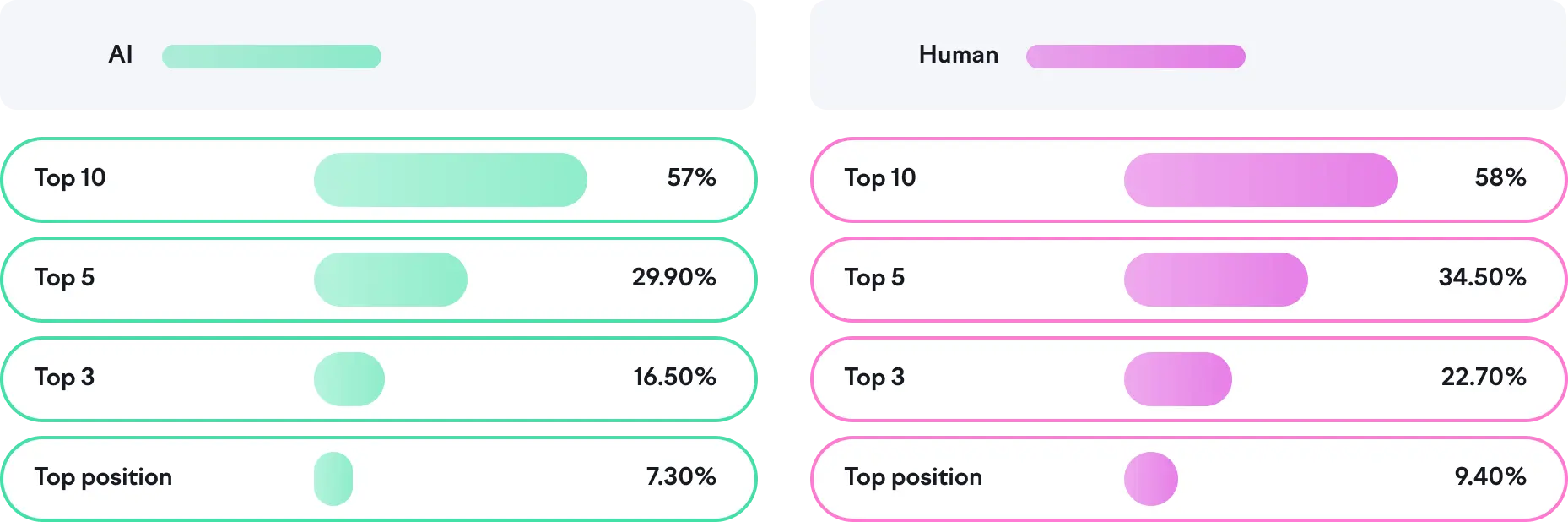
Despite all the fear-mongering, AI content is ranking – and ranking well. A comprehensive analysis of 20,000 blog URLs reveals some surprising truths about AI content performance.
The Performance Reality:
57% of AI content lands in the top 10 (compared to 58% for human content)
8% of top-ranking URLs were classified as “likely AI-generated”
The performance gap between AI and human content is minimal across all positions
Marketer Results: The survey data backs this up:
39% of marketers saw increased organic traffic after publishing AI content
33% said AI content performed better than human-written content
Only 9% found AI content performed worse
The Winning Formula: 73% of successful marketers use a combination of AI and human input. They’re not just hitting publish on raw AI output – they’re enhancing it.
Enhancement Tactics:
69% refine AI drafts with human editing
48% build on initial AI drafts with additional research
55% conduct original research to strengthen content
Many add expert interviews, statistics, and personal experiences
The Bottom Line: Google doesn’t penalize AI content – it penalizes low-quality content. The tool doesn’t matter; the value does. Ross Simmonds from Foundation Marketing puts it perfectly: “I think AI is the equivalent of spell check today.”
Use AI as an assistant, not a replacement. Combine it with human insight, original research, and genuine expertise. The result? Content that ranks well and serves readers better.
Read the full report from Semrush.com ➞
➞ From Google
Everything from Google search this week —
→ Google is testing Discover on Desktop (x.com)
→ Google I/O 2025 recap: AI updates, Android XR, Google Beam and everything else announced at the annual keynote (engadget.com)
→ You can use Google’s AI to get information from content hidden behind paywalls. (x.com)
→ Google Ai videos now can talk, see example (x.com)
→ Another — this whole car show news cover is made by Google latest video AI update (x.com)
➞ AI + Social
Find out what’s happening in the social media and artificial intelligence world —
→ How the U.S. Public and AI Experts View Artificial Intelligence (pewresearch.org) – The public and experts are far apart in their enthusiasm and predictions for AI. But they share similar views in wanting more personal control and worrying regulation will fall short
→ Study: American Consumers Are Not Fooled by AI Generated Images (joeyoungblood.com)
→ Reddit Q1 Report: What It Means For Digital Marketing And SEO (searchenginejournal.com)
→ How Gen Z is using AI to build personal brands — a guide that helped me build a LinkedIn presence that’s reached over 140 million (hubspot.com)
→ How to get an immediate traffic boost from your Facebook page (x.com)
→ TikTok Users Spend Twice as Much Time on the App as Instagram Users Spend on Instagram (thewrap.com) – A new report shows the average American TikTok user spends 108 minutes per day on the app — 60 minutes more than the average Instagram user does
→ Facebook increasing as part of social traffic mix after algorithm change, data shows (pressgazette.co.uk) – More than a third of major global news websites saw both Facebook share and total social referral traffic growth in March.
→ AI Crawlers Are Reportedly Draining Site Resources & Skewing Analytics (searchenginejournal.com)
➞ Worth Reading
These are the articles that will help you refine your marketing knowledge —
→ Semantic SEO: The Advanced Skill Most SEOs Pretend to Understand (ahrefs.com)
→ After optimizing 100+ websites this guy identified 7 technical issues that move the needle (x.com)
→ What Is llms.txt, and Should You Care About It? (ahrefs.com)
→ Beyond the Click: Understanding Organic Traffic Changes (linkedin.com)
→ Use ChatGPT Operator to check your rankings immediately following a Google Core Update (mariehaynes.com)
→ Trapping misbehaving bots in an AI Labyrinth (cloudflare.com)
➞ What This All Means for Your Strategy
These three developments paint a clear picture of where SEO is heading:
Quality Over Quantity: Google’s getting better at identifying thin content, whether it’s AI-generated or not
Patience is Essential: Building search authority takes years, not months
AI is a Tool: Use it wisely as part of a broader content strategy, not as a magic ranking solution
The winners in this new landscape will be those who focus on creating genuinely useful content, whether they use AI tools or not. The losers will be those chasing shortcuts and gaming systems.
SEO isn’t getting easier, but it’s getting clearer. Focus on value, think long-term, and use every tool at your disposal – including AI – to create better content for your audience.
Until next week,
Nishat from HighDegree*
P.S. Have a question about implementing these strategies? Hit reply – we read every email and often feature reader questions in future issues.
➞ Who is Nishat Shahriyar?
I am a Digital Marketing Strategist, doing this since 2007. Now working as a Product Marketing Lead at Fluent Forms (The best lead generation tool for WordPress), Previously at Fluent Support (The best WordPress Helpdesk Plugin).
Connect with me, if you are not connected through my LinkedIn or Follow me on — X/Twitter – @rednishat
Leave a Reply