The click drop is confirmed. Here’s what to do about it. AI Overviews, broken links, and the case for being helpful.
Hi friends,
Welcome to the new issue of HighDegree*: Cutting Through the Noise in SEO & Digital Marketing
The numbers are in on AI Overviews and they’re not great for organic traffic. But traffic loss is only half the story this week. We’re also looking at a sneaky internal linking mistake that’s quietly hurting your rankings, a sharp reminder that SEO was never just about visibility, a case for leading with helpfulness instead of optimization, and a hard question about what “AI buttons” are actually doing for your GEO strategy.
Let’s jump in.
➞ In this Week
- Google AI Overviews confirmed to cut organic clicks by 38% in a controlled field study
- Tracking parameters in internal links are a silent SEO killer; here’s the fix
- SEO is about being believed and chosen, not just seen
- Searchers don’t want to be impressed; they want to be helped
- AI buttons: clever UX feature or a GEO risk you’re not thinking about?
➞ Subscribe
If you are not subscribed to HighDegree* yet, please subscribe to us by clicking the “Subscribe” button below. I will post every issue to HighDegree* substack version, so you can get it instantly in your inbox every time I hit publish!
➞ The 38% Click Drop Is No Longer Just a Theory
A randomized field experiment, the kind that actually controls for variables has confirmed what many SEOs suspected: Google AI Overviews reduce organic clicks on affected queries by 38%. Not an estimate. Not correlation. A controlled study.
What makes this finding worth sitting with is that Google’s own user satisfaction scores didn’t drop. People liked the AI answers. They just didn’t click through to the sites that produced the underlying content. For publishers and bloggers, this is the core tension of the AI search moment: Google improves the product experience by surfacing your work, but the traffic reward disappears.
The practical takeaway isn’t to panic, it’s to think harder about which types of content AI Overviews are less likely to fully satisfy. Complex how-tos, opinion pieces, tools, data, and anything requiring a decision tend to pull people through to the actual page. Thin informational content is the most exposed. If 38% of your traffic is at risk, the question is: which 38%?
Read the full report from searchenginejournal.com ➞
➞ That UTM Parameter in Your Internal Links Is Quietly Hurting Your SEO
Most marketers add tracking parameters to internal links without a second thought, it’s just what you do to measure performance. But those ?utm_source=newsletter tags appended to your own site’s URLs are creating a problem Google can’t ignore: duplicate content.
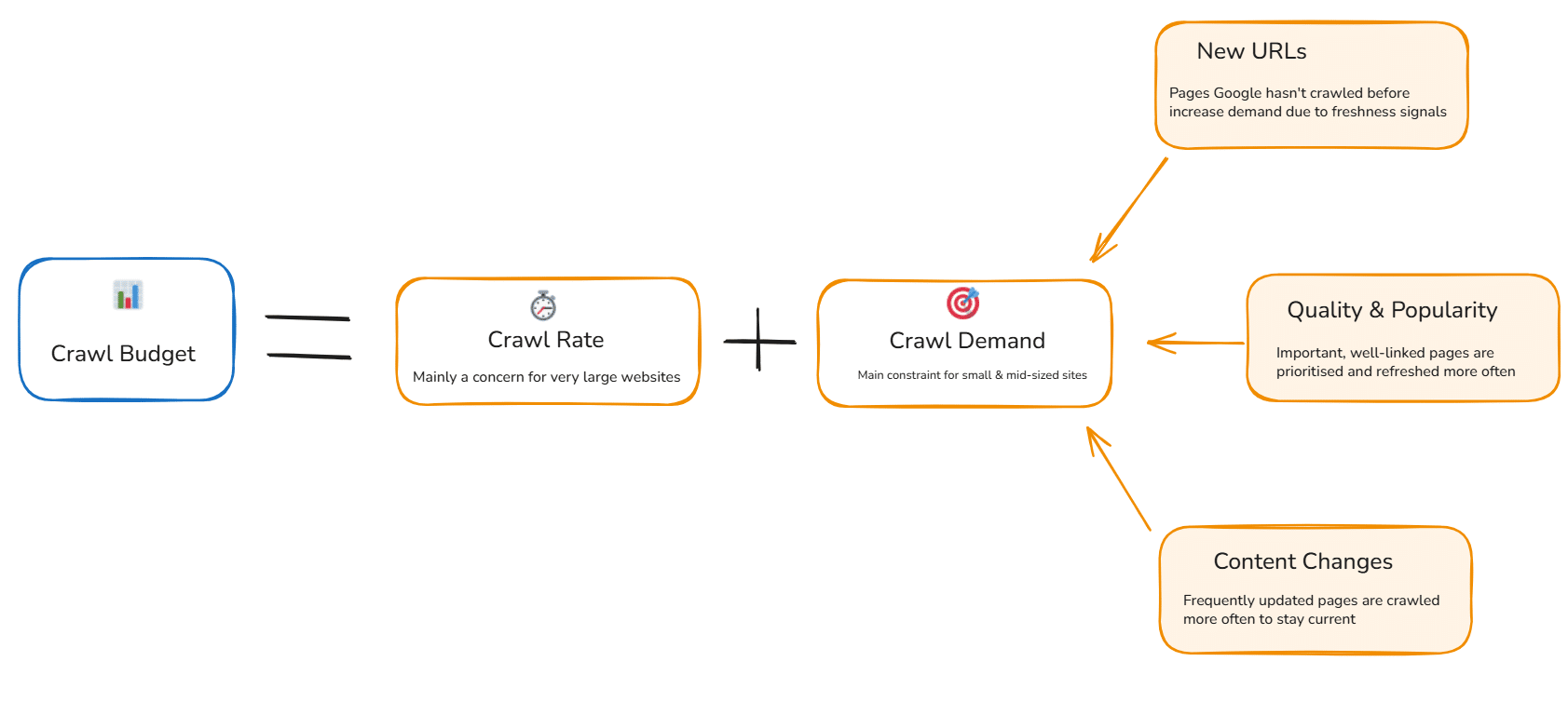
When Googlebot crawls yoursite.com/page/ and yoursite.com/page/?utm_source=email and yoursite.com/page/?ref=sidebar, it may treat each as a separate URL. That fragments your link equity, dilutes your crawl budget, and can muddy up which version Google considers canonical. The result: the page you want ranking may not be the one Google picks.
The fix is cleaner than you’d expect. Strip tracking parameters from internal links entirely, they don’t need to be there for analytics to work. Use Google Search Console’s URL parameter settings or a canonical tag strategy to tell Google which version matters. Save the UTMs for external links only, where the traffic source actually means something new. A small change, but one that stops a slow, invisible leak.
Read the full report from searchengineland.com ➞
➞ Ranking Is a Start. Being Believed Is the Job
You can rank on page one and still lose the click. You can get the click and still lose the customer. That’s the argument at the center of this piece, and it’s one worth reading if you’ve been thinking about SEO purely as a traffic game.
The shift is real: search results are crowded enough that visibility is table stakes, not a competitive advantage. What differentiates a site that converts from one that doesn’t is credibility, whether the page signals expertise, gives the reader a reason to trust the source, and makes a case for why this answer, from this site, is worth acting on.
For bloggers and small business owners, this plays out in things you can control: author bylines with real credentials, specific details instead of vague generalities, first-hand experience, and clear signals of who’s behind the content.
E-E-A-T (Experience, Expertise, Authoritativeness, Trustworthiness) isn’t just a Google framework, it’s the thing real readers are also evaluating, even if they don’t use that language. Getting seen is the first step. Getting believed is the whole point.
Read the full report from searchengineland.com ➞
➞ Stop Optimizing. Start Being Useful.
Here’s a simple reframe that’s easy to forget when you’re deep in keyword research: searchers aren’t looking for optimized content. They’re looking for help. A person who Googles “why is my WordPress site slow” wants their site to be faster, not a 2,000-word article that covers every possible angle to hit a keyword difficulty score.
This piece makes the case that the best SEO strategy right now is also the oldest: answer the actual question. Not the keyword. Not a cluster of related terms. The specific thing the person typed, why they typed it, and what they’d need to walk away satisfied.
That means writing shorter when shorter is right. Recommending a competitor if it’s the better answer. Being honest about limitations. Structuring content around the reader’s next step, not the writer’s topic outline. Google’s ranking systems are getting better at detecting whether a page genuinely resolves a query or just contains the right words. The sites that benefit from that direction are the ones that have always treated helpfulness as the point, not a ranking tactic.
Read the full report from searchengineland.com ➞
➞ AI Buttons Look Smart. But Are They Helping Your GEO?
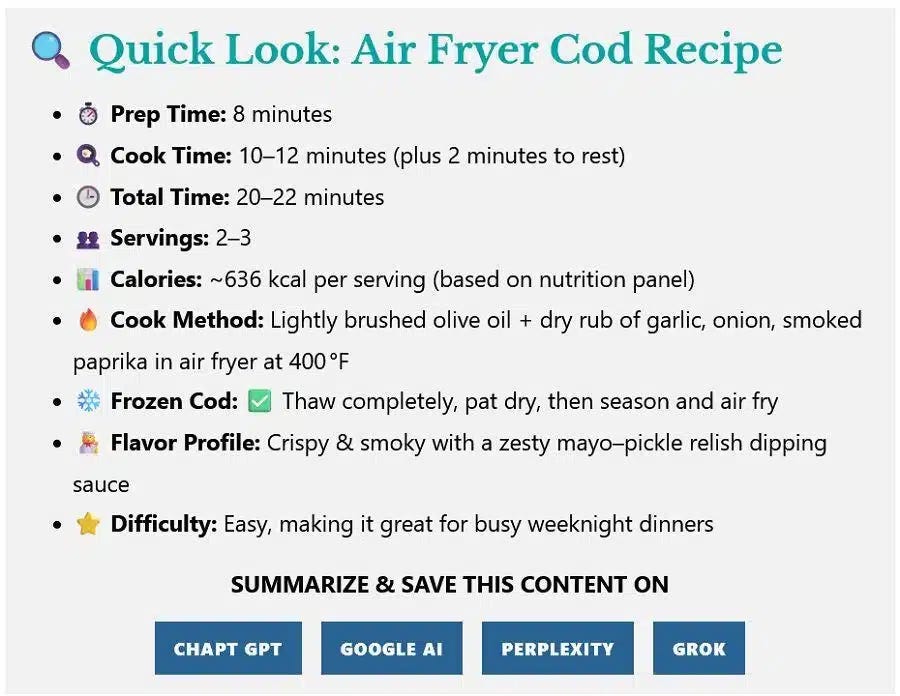
AI buttons, those “Ask AI” or “Summarize this” prompts now appearing on publisher sites and content tools seem like a natural fit for the current moment. Helpful to users, modern, forward-thinking. But this piece asks a harder question: what do these buttons actually do for your visibility in generative AI results, and could they backfire?
The UX case is solid. Readers get quick summaries, stay on-page longer, and engage more. But from a Generative Engine Optimization (GEO) perspective, the picture is murkier. If your page’s content is being summarized by an on-page AI tool, it may reduce the signal that external AI systems like Google’s AI Overviews or ChatGPT need to cite your page as a source. You might be training users to consume your content without the engagement signals that tell search engines the page is valuable.
The takeaway isn’t “remove all AI buttons.” It’s to think through the full loop: UX gain on one end, potential GEO cost on the other. If your strategy includes being cited in AI results, the way your content is structured and consumed matters more than ever.
Read the full report from searchengineland.com ➞
➞ From Google
Everything from Google search this week —
→ Google updates AI search to include quotes from Reddit and other sources (techcrunch.com)
→ 5 new ways to explore the web with generative AI in Search (blog.google)
→ Google AI Overviews with author names & source (again) (seroundtable.com)
→ Google’s Mueller flags SEO gaps in AI vibe coding (searchenginejournal.com)
→ Google is testing new bot authorization standard (searchenginejournal.com)
→ Google fixes Search Console’s year-long data logging issue — well, kind of… (searchengineland.com)
→ Google Search may be deindexing URLs at higher rates (seroundtable.com)
→ Google’s insight on “browsy” queries: what it means for SEO (searchenginejournal.com)
→ Google shares insight on black box AI models in search (searchenginejournal.com)
→ Google on AI Overviews & AI Mode being isolated systems (or not) (seroundtable.com)
→ Google tests fresh updates label for search snippets (seroundtable.com)
→ Google Search revenue hits 19% growth: what Pichai’s AI claims really mean (searchenginejournal.com)
→ Google lists 9 scenarios that explain how it picks canonical URLs (searchenginejournal.com)
→ Google AdSense vignette ads setting may trigger back button hijack penalty (seroundtable.com)
→ Google Search to penalize back button hijacking schemes (searchengineland.com)
→ Google Health Coach is becoming globally available (blog.google)
→ Google tests ‘Ask YouTube’ conversational search experiment (searchenginejournal.com)
→ Google on publishing commodity content (seroundtable.com)
→ Google: you can do a lot of SEO that doesn’t work and still do okay (seroundtable.com)
→ Google may ignore links from sites that spam & violate policies (seroundtable.com)
➞ AI + Social
Find out what’s happening in the social media and artificial intelligence world —
→ OpenAI releases GPT-5.5 Instant update to make ChatGPT smarter with fewer emoji (9to5mac.com) – OpenAI’s latest model update aims to cut the filler and improve accuracy, a notable nudge toward more grounded AI responses.
→ OpenAI launches self-serve ads manager for ChatGPT (searchenginejournal.com) – Advertisers can now buy placements inside ChatGPT directly, marking a major commercial shift for the platform.
→ Similarweb data: ChatGPT ads click-through rates (seroundtable.com) – Early CTR data on ChatGPT ads is out, worth checking if you’re considering adding the platform to your paid mix.
→ Meta is preparing to launch AI agents to undertake tasks for users (socialmediatoday.com) – Meta’s agents will go beyond chat, handling real tasks on behalf of users across its apps.
→ Instagram updates algorithm to benefit original creators (socialmediatoday.com) – Instagram is explicitly downranking reposts and aggregator accounts in favor of people who make original content first.
→ Why TikTok’s comments section is driving the majority of first purchases right now (glossy.co) – The comment section has quietly become a high-trust sales channel — especially for beauty and lifestyle brands.
→ LinkedIn partners with Amazon Ads (socialmediatoday.com) – LinkedIn and Amazon are combining audience data for ad targeting, a big move for B2B brands with retail crossover.
→ OpenAI expands ChatGPT ads to users not logged in (adsroid.com) – ChatGPT ad reach just got wider, the logged-out audience is now in play for advertisers.
→ In Harvard study, AI offered more accurate emergency room diagnoses than two human doctors (techcrunch.com) – A controlled study found AI diagnostic accuracy outperformed attending physicians in ER settings, a result that’s going to generate debate for a while.
→ Vine makes a comeback (socialmediatoday.com) – Yes, really. The short video platform is back, timing that makes a lot more sense when you look at the current TikTok situation.
→ Anthropic strikes SpaceX data center deal as it plows ahead on AI coding (reuters.com) – Anthropic is scaling hard on infrastructure while pushing self-improvement features for its AI agents.
→ Reddit shares key trends for in-app financial services research (socialmediatoday.com) – Reddit is positioning itself as a legitimate research platform for financial decisions, useful context if your audience includes investors or personal finance readers.
→ AI-generated actors and scripts are now ineligible for Oscars (techcrunch.com) – The Academy has drawn a clear line, AI-generated performances and writing will not qualify for award consideration going forward.
→ X introduces rebuilt AI-powered ad platform (socialmediatoday.com) – X’s new ad system promises smarter targeting and automation, whether it delivers will depend on the audience data it can actually access.
→ Stripe updates Link, a digital wallet that autonomous AI agents can use, too (techcrunch.com) – Stripe is building payment infrastructure for AI agents, not just humans, a glimpse at what agentic commerce looks like in practice.
➞ Worth Reading
These are the articles that will help you refine your marketing knowledge —
→ Reddit marketing for SaaS: insights from 117 brands (searchengineland.com)
→ Data shows AI citation patterns reveal strategic SEO opportunities (searchenginejournal.com)
→ AI agents can’t help if they can’t see your marketing data (searchengineland.com)
→ How AI-generated content performs in search: results from an experiment by SE Ranking (seranking.com)
→ Adobe report: U.S. retailers see surge in AI traffic, but many websites are not entirely readable by machines (business.adobe.com)
→ ChatGPT often retrieves but rarely cites Reddit pages, data shows (searchenginejournal.com)
→ Duda study finds AI-optimized websites drive 320% more traffic to local businesses (blog.duda.co)
→ 17 content types to survive Google’s zero-click future (signal.zyppy.com)
→ The missing guide to SEO domain migrations (joost.blog)
→ Does your boss have AI brain? (milkkarten.net)
➞ What This All Means for Your Strategy
The gap between looking good in search and actually serving the person who searched is getting harder to close and more expensive to ignore.
AI Overviews are taking clicks. Tracking parameters are fragmenting your crawl. Generic content isn’t building the trust that converts. And new tools, whether AI buttons or GEO tactics, need to be thought through carefully rather than bolted on for appearances.
The sites that hold up through all of this are the ones that were already doing the basics well: clear, specific, helpful content from an identifiable source, with a clean technical foundation. That hasn’t changed. The bar for what counts as “good enough” is just higher now.
Until next week,
Nishat from HighDegree* Marketing Newsletter
P.S. Have a question about implementing these strategies? Hit reply – we read every email and often feature reader questions in future issues.
➞ Who is Nishat Shahriyar?
I’ve been a Digital Marketing Strategist since 2007. Today I’m the Product Marketing Lead at Fluent Forms (a WordPress form and lead-generation plugin used by 700K people), FluentPlayer (a WordPress Video Player Plugin) and Ninja Tables (a WordPress table builder plugin used by 80K people). Before that, I led marketing at Fluent Support (a WordPress helpdesk plugin used by 10K people).
Connect with me on LinkedIn or follow me on X/Twitter at @rednishat for SEO & Marketing updates.